
Pimax Crystal Super Review: An Uncompromising PCVR Powerhouse
I’ve been covering VR headsets for a long time, so its a miracle that it took this long for my first foray into PCVR headsets. Thanks to Pimax, we can experience the most high-end VR headset I’ve ever used. Let’s dive into our Pimax Crystal Super review!
The Pimax Crystal Super delivers 29 million pixels with a resolution of 3840×3840 per eye, making it one of the best PCVR headsets for sim racing or other graphically intensive games (AAA VR mods, anyone?) However, with great power comes great tradeoffs. Is the superior headset technology worth the weight, clunky setup, and more importantly, the $1799 price tag?

Design & The Swappable Optical Engine
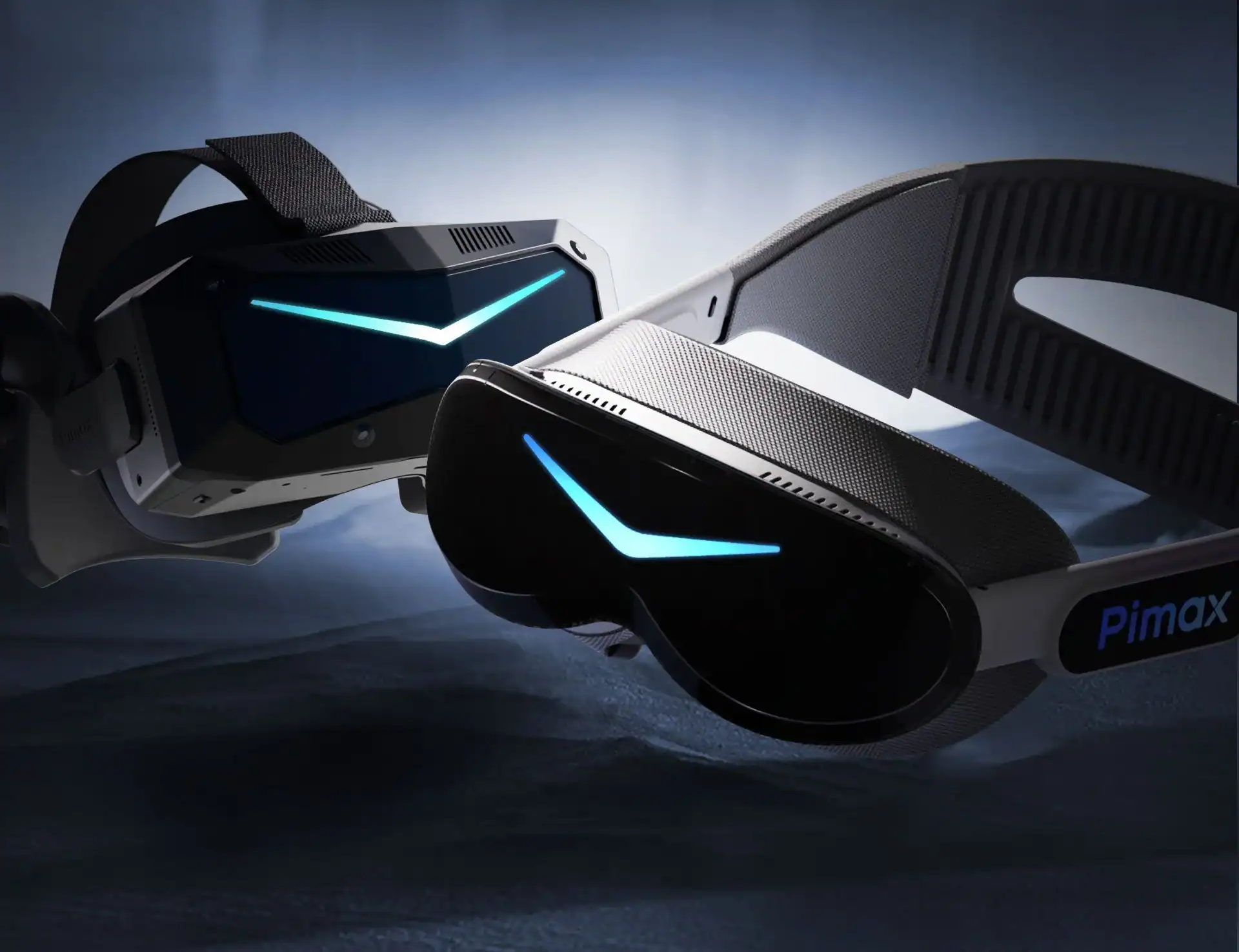
My first impression upon seeing the device for the first time was “woah, that thing is MASSIVE.” The Pimax Crystal Super’s weight worried me the most. This headset is heavy; however, it is surprisingly well balanced. It’s still not as comfortable as something like the Meta Quest 3, but it is far more comfortable than it looks. Pimax doesn’t shy away from being a BIG headset; however, with that size comes some serious hardware.
The Pimax interchangeable optical engine is seriously impressive, allowing you to upgrade just the most important bits like the screen and lenses in the future, while keeping the frame, audio solution, and tracking. Why replace a whole headset when you can just replace the parts most likely to need an upgrade?
While I have always preferred standalone headsets due to wireless freedom, I can appreciate a no-compromise device that aims to do everything the absolute best way possible. Which is why, while I can forgive a wire, it’s hard to defend needing THREE plugs to complete the setup.
The Pimax Crystal Super requires a USB3.0 and DisplayPort from your computer, but ALSO requires a dedicated power brick. While it ultimately is one wire going into the headset, three separate connections come out the other end, which is a clunky experience.
Visual Clarity: 29.5 Million Pixels & Lens Optics
The 3840×3840 VR resolution here is the standout feature. Surpassing even the Apple Vision Pro, this thing has some SERIOUSLY good visuals. If all you care about is visual fidelity, stop reading now and just go buy a Pimax; they are absolutely unmatched in the VR optical game. Their colors blow their competitors out of the water, and their crisp resolution is unmatched; just make sure you have a suitable PC to drive it. More on that below.
What surprised me the most, however, was just how good the concave pancake lenses are. After using both the Meta Quest 3 and the GalaxyXR, I was a bit worried that Pimax’s lenses looked a bit small, similar in size to the GalaxyXR. This was one of my biggest complaints about GalaxyXR; the large Meta Quest 3 lenses are just so much easier to keep clear for long periods. However, the concave Pimax lenses are so good at reducing glare, I found myself forgiving the occasional headset adjustment more than I do with the GalaxyXR.
Performance: Dynamic Foveated Rendering & PC Demands
The biggest thing to keep in mind when deciding on a Pimax headset is that you need a suitable PC to run it effectively. Remember, with a headset that pushes this level of visual fidelity, you’re going to want an RTX 4090 or equivalent if you are looking to push F1 2026 or Cyberpunk 2077’s VR Mod to high, despite the minimum requirements only suggesting a 2070.
Luckily, with Dynamic Foveated Rendering 2.0 and 120Hz eye tracking, you don’t need quite as powerful a build as you’d expect. I run a modest RTX 4070 with an Intel i5-12400 and had absolutely no problems running games at medium settings. Eye-tracked foveated rendering allows a PCVR setup to render only the exact point on the screen you are looking at, saving on PC resources.

Comfort & Audio: Built for Sim Sessions
As mentioned above, although the headset is HUGE, the weight distribution and headset placement make for a surprisingly comfortable experience. That said, it ultimately is still more than 2 pounds strapped to your head, so expect discomfort after long sessions.
The built-in audio solution is a purpose-built, one-way firing speaker, providing an immersive soundscape while not being too loud for those around you. If you are looking for an unbeatable sim racing or sim flight experience, the Pimax just may be the best option available today.
Pros and Cons
The Verdict: Is the Crystal Super Right for You?
Ultimately, for me, the finicky setup of the Pimax Crystal Super prevents me from making it my main headset. It is objectively a better experience than any other headset I own, but I personally prefer wireless freedom over top-of-the-line graphics. That said, if you are looking for the best-looking PCVR experience possible, you’d be hard-pressed to do better than a Pimax headset.
The Pimax Crystal Super is an uncompromising piece of hardware built for a very specific type of gamer: Sim-Racers and others looking for uncompromised VR visuals. While the finicky setup and high price tag mean it isn’t for casual players, the visual return on investment is unparalleled.
Where to Buy
Check out the links below to secure your headset or extra optical engines, and purchases made via our links directly support the site!
Looking for a deal on Pimax Crystal Super? Make sure to shop the Back to School Sale!